Sunday, July 31, 2005

A Crass Course in American Culture

The sight of a feeble old man being publicly humiliated is not a comical sight--and yet, I must admit I derived some satisfaction from watching Bernard Goldberg get picked apart by Jon Stewart in an interview on the latter's show a couple weeks ago. Goldberg, the former CBS newsman turned conservative commentator, was on the Daily Show to promote his new book 100 People Who Are Screwing Up America (and Al Franken is #37). Appearing in front of an unsympathetic crowd on a late-night cable TV show specializing in satire, I'm not quite sure what he hoped to achieve.

Despite his unflattering performance, I nonetheless ventured to read Goldberg's book for myself. Now it would be easy to poke fun of the man for being a "square" and hopelessly "out-of-touch" when he rants about the increased proliferation of sex, profanity, and other crass elements into the popular culture. However, between his predictable take on stale subjects such as obscene rap lyrics and frivolous lawsuits, Goldberg does raise some valid points. One segment that especially resonated with me was his complaint of the cheapening of "serious news" into "murder-of-the-week crime shows or vehicles for dumb celebrity ass-kissing interviews." Having worked so long for CBS News and 48 Hours, Goldberg's anger here is palpably personal.

Yet even the occasional astute observation doesn't provide enough depth to back his claims of a depraved society. In his book, Goldberg never examines the cause of today's social trends or suggests why they are accepted and embraced by the public. Instead, he chooses to excoriate an arbitrary assortment of pop culture icons, left-wing academics, and other public figures who annoy him. The vast majority of his targets actually wield little to no influence on most American's lives. Barbara Streisand, Paul Krugman, and Paris Hilton's parents are key members of this unholy alliance which possesses such extraordinary control over public civility? The sex lives of adults today are guided by episodes of Two and a Half Men? Give me a break.

Undoubtedly the creation of "the list" of 100 people was a clever marketing ploy for the book, designed to be controversial and draw attention. On that note, it has succeeded. Yet the list also happens to be the book's downfall. What could have been an engaging analysis of American culture was instead distracted by Goldberg's selections, which do not live up to the title of the book.

The list, which is composed overwhelmingly of people with no real power, also features a majority of people that many Americans may never even have heard of. Many of Goldberg's villains--rabid feminists, liberal cartoonists, college professors, partisan polemics--make ripples only on the fringes of society. Their position outside the mainstream aside, they also happen to be products of the culture, not the cause of. Try as they might, they really couldn't succeed in screwing up America even if they wanted to!

All in all, 100 People Who Are Screwing Up America is a surprisingly readable book (even for liberals) that has its funny and informative moments. In between that, however, the book is prone to exaggeration, inaccuracy, or flat out missing the point. It's worth a read to check out for yourself the accuracy of this latest purported cultural barometer.

Thursday, July 28, 2005

NASA Grounds Shuttle Fleet

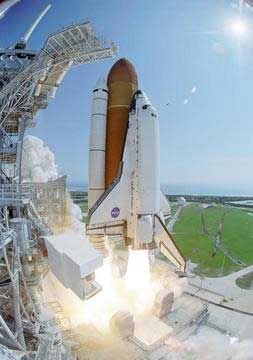
NASA Photo: Discovery 'Return to Flight' LaunchRocket science doesn't come easy these days. Following the February 2003 Columbia tragedy, NASA called off all shuttle missions while the disaster was investigated and the shuttle program itself was reevaluated.
Finally, after 29 months of no launches, Discovery took off on Tuesday. Immediately, problems were noticed--most serious of all, a recurrence of falling foam debris, almost the same size as that which brought down Columbia. Thankfully, the Discovery appears not to have been seriously harmed and the crew should not be in any jeopardy for the rest of its mission.

However, with this latest setback, NASA has once again grounded the space shuttle fleet. "Until we fix this, we're not ready to fly again," said shuttle program manager Bill Parsons.

After the Columbia disaster, NASA spent over $1 billion in trying to fix the shuttle--which, according to President Bush's vision, is due to be retired in 2010 with the completion of the International Space Station. What is now evident is that there is still much work left to be done, and we are unfortunately not ready to take that next step. NASA will now return to square one while its public image takes a beating and people question the worth of manned space exploration itself.

On that point at least, the answer is obvious: yes, it always has been, and always will be worth it. In light of the space program's current troubles, it's worth noting that July 20 marked the 36th anniversary of the Apollo 11 moon landing. Back in 1969, using computers no more powerful than today's simplest handheld calculators, we were able to send two men to the moon and bring them back home safely. Let that serve as our inspiration to proceed, then, to do the things "not because they are easy, but because they are hard."

Saturday, July 16, 2005

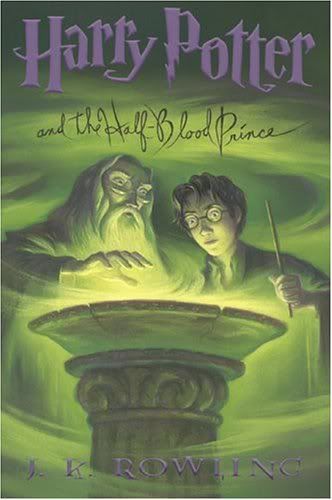
Harry Potter and the Half-Blood Prince


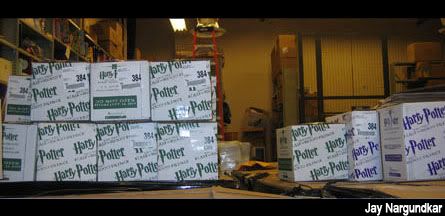
The most widely anticipated book of all time was released just after the stroke of midnight, when it was "officially" July 16, 2005. Was it worth all the hype? Second in a line of several hundred at my local bookstore to receive a copy of Harry Potter & the Half-Blood Prince, I started reading and didn't stop until, sometime after dawn (and 652 pages later) I was finally finished.

It was terrific. The preceding book, Order of the Phoenix, though good, suffered from a sluggish plot and Harry Potter's own unlikable personality. Although The Half-Blood Prince clocks in at "only" 652 pages (more than 200 pages less than OotP), both of the aforementioned problems are remedied. Without giving away any of the plot of the new book, it is sufficient to say that it is packed from start to finish, and that the last 150 pages or so move the plot farther than the previous couple books combined! Harry himself is also once again a hero worth rooting for.

The Half-Blood Prince is also the most well-written book of the series. Rowling's trademark humor and knack for description are present, as always. However the story now includes treatments of more mature subjects, ranging from the light (teen relationships, love) to the more sober (psychological terror, graphic violence, and death). While the Harry Potter series remains a "children's series", it is quite clear that Rowling is no longer really writing for the little ones.

After two years of waiting, I'm finally finished with the sixth book and feel at a loss (and not just because of the unsettling ending). Of course, I'm already biting my nails in impatience to read the seventh book. Yet there's the regret that comes with realizing there's only one more left(!), and then this cultural phenomenon will have passed us by.

What a ride it's been.

Thursday, July 14, 2005

Woodward and The Secret Man

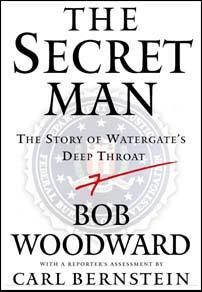
For 33 years, the identity of "Deep Throat"--the anonymous source who helped Washington Post reporters Bob Woodward and Carl Bernstein with their investigation into the Watergate scandal--was kept a secret. Finally, on May 31, 2005, 91-year-old W. Mark Felt stepped forward and admitted "I'm the guy they used to call Deep Throat." Last night I finished reading Bob Woodward's new book, The Secret Man, which chronicles his long personal relationship with Felt, the former #2 man at the FBI (see right).
As Woodward reveals, the world's most famous reporter-source relationship actually began as a friendship through a chance encounter. In 1969, Lt. Bob Woodward was nearing the end of his term in the Navy and was yet undecided on his future. One day on a routine courier assignment to the Nixon White House, he struck up a conversation in the waiting room with a distinguished-looking elderly man who, as luck would have it, was Mark Felt. The young Woodward left an impression on the senior FBI man, who offered encouraging words and allowed the former to call him on later occasions for career advice.

Woodward goes on to describe how Felt's influence steered him away from law school and how he wound up deciding to try his hand at reporting. After being rejected by the Post and enduring a stint at a podunk weekly, Woodward finally managed to join the Post staff covering the lowly local crime beat. What a fateful turn of events then, that the "third-rate burglary" at the Watergate he was assigned to cover would catapult him into the rank of the most celebrated journalist of his time.

The Secret Man has been criticized some for its brisk treatment of the events of the Watergate scandal and focusing more on Woodward himself. Not that there are a dearth of enlightening and entertaining details included here--I enjoyed reading about the elaborate system of communication Felt devised in order to set-up their clandestine meetings in that famous underground parking garage.

Anyhow, I don't find fault with Woodward for skimming over the Watergate story; after two bestselling books (All the President's Men and The Final Days) about the era, and thirty years of looking back, that story is familiar enough. What is most interesting to me, then, is the story of Woodward himself--how he was able to do what he did and what he was thinking along the way and since. Woodward is the first to admit in his book that despite the warm relationship he once had with Felt, that bond in later years--especially during Felt's post-Watergate legal troubles--was broken. For almost twenty years, until 2000, he had in fact not even spoken to Felt. In The Secret Man's most moving chapter, Woodward describes his emotional reunion with an aged Mark Felt whose memory has deteriorated. Woodward says he has always wrestled with the effects of Watergate on himself and Felt. After Felt's 1980 conviction he realized:
For me, Watergate had been a cleansing. For him, it was...the opposite. The two of us saw his actions and their results so differently. I realized, but any reflections on the unfairness of it all only added to my growing feelings of personal responsibility for his plight.

The Secret Man combines journalistic history with a personal memoir. Woodward also covers the post-Watergate hunt for Deep Throat, the wrong predictions, close calls, and even one who got it right--and kept the secret. Still, if you come to this book looking for all the answers, you will be disappointed--even Woodward himself admits this, citing Felt's diminished mental condition as the reason why we will never completely know why or how. Oddly enough, I kind of like it that way. Carl Bernstein, Woodward's investigative partner during Watergate, closes the book with a "Reporter's Assessment" that also makes for a good read--especially the moment when he first realized "Oh my God. This president is going to be impeached."

Barring a forthcoming cogent and engaging memoir by Mark Felt himself, this book will be the last important treatment of the Watergate scandal. As the most illuminating personal guide to the most famous political saga in recent history, The Secret Man is a compelling read.

India Loves America

The results of a study released in June by the Pew Global Attitudes Project show that India is the most pro-American country in the world. While the attitudes of several major European powers as well as former staunchly pro-U.S. nations like Canada and Poland have soured, it appears that an astonishing 71% of Indians give a thumbs-up to Uncle Sam. Even taking into account that the Pew survey may have overrepresented urban (and presumably more pro-American) areas, the 27% increase in favor since 2002 is tremendous--and at odds with the rising tide of anti-Americanism around the world.
So why is India so solidly pro-American? Part of it comes from the fact that so many Indian immigrants have found success in America, especially in respectable fields like medicine, engineering, and computers. But whereas in past decades it was virtually a necessity that Indians come to the U.S. to succeed, that is no longer the case. Thanks to India's blossoming economy and the tech boom that Thomas Friedman and others have chronicled, bright Indians (at least in urban areas) are able to thrive in their own country. With increased affluence, they are better able to identify with the West, and America in particular. Hence a former Soviet-aligned country now sees the United States as a vastly preferable model.

It is interesting to note that in Pakistan, our dubious "ally", only 23% of the public feel kindly toward us. "With friends like that..." comes to mind; add "impediment to GWOT (Global War on Terrorism)" to the list of reasons why a shift is needed in our outdated Pakistan-over-India policy in South Asia. To his credit, President Bush has been quick to realize the value of cultivating strong ties with India. Prime Minister Manmohan Singh is visiting the U.S. next week, and will be the guest of honor at the first state dinner of Bush's second term. While the pairing between two secular democracies and victims of terrorism may seem natural, it is long overdue. I'm glad to see them finally hooking up!

Saturday, July 09, 2005

Future of Terrorism Determined by Muslims

We're all very aware that a sizable portion of the Muslim world does not like the West and what it stands for. Even so, the vast majority of the Muslim world is moderate and sensible. They reject the extremism of the terrorists who act out in barbaric ways that subvert the values of an entire culture. Unfortunately, terrorists continue to believe they have the moral authority to act on behalf of their people. This is because, for the most part, their people are not being emphatic enough in their rejection of terrorism.

The sight of an angry mob in a Middle East country burning an American flag is commonplace. Compare that to the number of times you see a mass demonstration of people in a Muslim county voicing their disapproval of al-Qaeda in such stringent terms--never! This unwillingness on the part of the Muslim world to "police their own" has been disastrous. Writing in Friday's New York Times on the day after the London bombings, Thomas Friedman says that this has got to change. "If it's a Muslim problem, it needs a Muslim solution", he warns, or else the alternative is an irreversible schism between the Western and Muslim worlds.

It doesn't have to be this way. But it will certainly continue to be this way unless the mainstream Muslim world becomes more vocal in its denunciation of those who would hijack Islam. The twisted ideology that fuels terrorism cannot survive once the environment it breeds in turns inhospitable. It is only then can our current "war on terrorism" truly be won.

Thursday, July 07, 2005

Google Earth: Bent on World Observation

For the past couple days, I've been playing around with Google Earth, the latest cool new toy offered by everybody's favorite tech wizards. Google Earth, a descendant of the Keyhole service, allows users to view satellite imagery of any part of the world. This feature, which has been around for many years, has now been integrated with data (where available) plotting transit systems, commercial enterprises, and more. A map overlay detailing schools, restaurants, hotels, and more yields extra information than just the standard terrain scan.

Google Earth is remarkably easy to use. Type in the location you're searching for, and the program automatically "flies" you to your destination in fine cinematic style. I did the requisite searches for famous landmarks (see examples), old neighborhoods, etc., and found the results (when data was available for the location) to be pleasing--if not practical, at least entertaining. Google Earth also tries to incorporate a three-dimensional aspect to the program, allowing users to "tilt" the landscape. While a cool idea, this feature rarely delivers results that look good without losing perspective or detail.

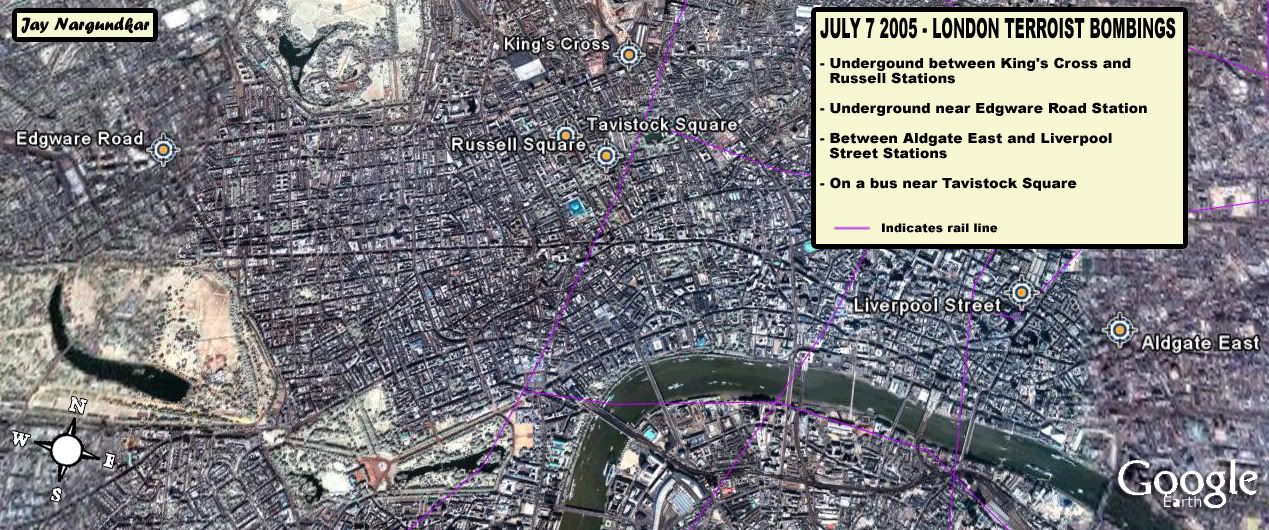
This morning, as I was following the details of the terrible tragedy in London, I decided to put Google Earth to the test to try and create a rudimentary map plotting the locations of the bombings. This proved to be remarkably easy; all I had to was type in the name of a location, say, "King's Cross Station, London", and I was "flown" immediately to the spot. By selecting or deselecting various options, I could view street names, transit stations, rail lines, and more. The resulting map I created is seen below:

Map of July 7 2005 London terrorist attacks.  Click to enlarge.

With regards to today's terrorist attacks, I think British PM Tony Blair said everything that needed to be said:
When they try to intimidate us, we will not be intimidated. When they seek to change our country or our way of life by these methods, we will not be changed. When they try to divide our people or weaken our resolve, we will not be divided and our resolve will hold firm. We will show, by our spirit and dignity, and by our quiet but true strength that there is in the British people, that our values will long outlast theirs. The purpose of terrorism is just that, it is to terrorise people, and we will not be terrorised.

I would like once again to express my sympathy and my sorrow to those families who will be grieving, so unexpectedly and tragically, tonight. This is a very sad day for the British people, but we will hold true to the British way of life.

Today is another reminder that the "war on terrorism" doesn't just take place in faraway countries. Despite all the precautions and security measures in place, our enemies can still on occasion take the war to our doorstep, with devastating results. We are reminded there is still much work ahead of us in order to ascertain a safer, more secure future.